
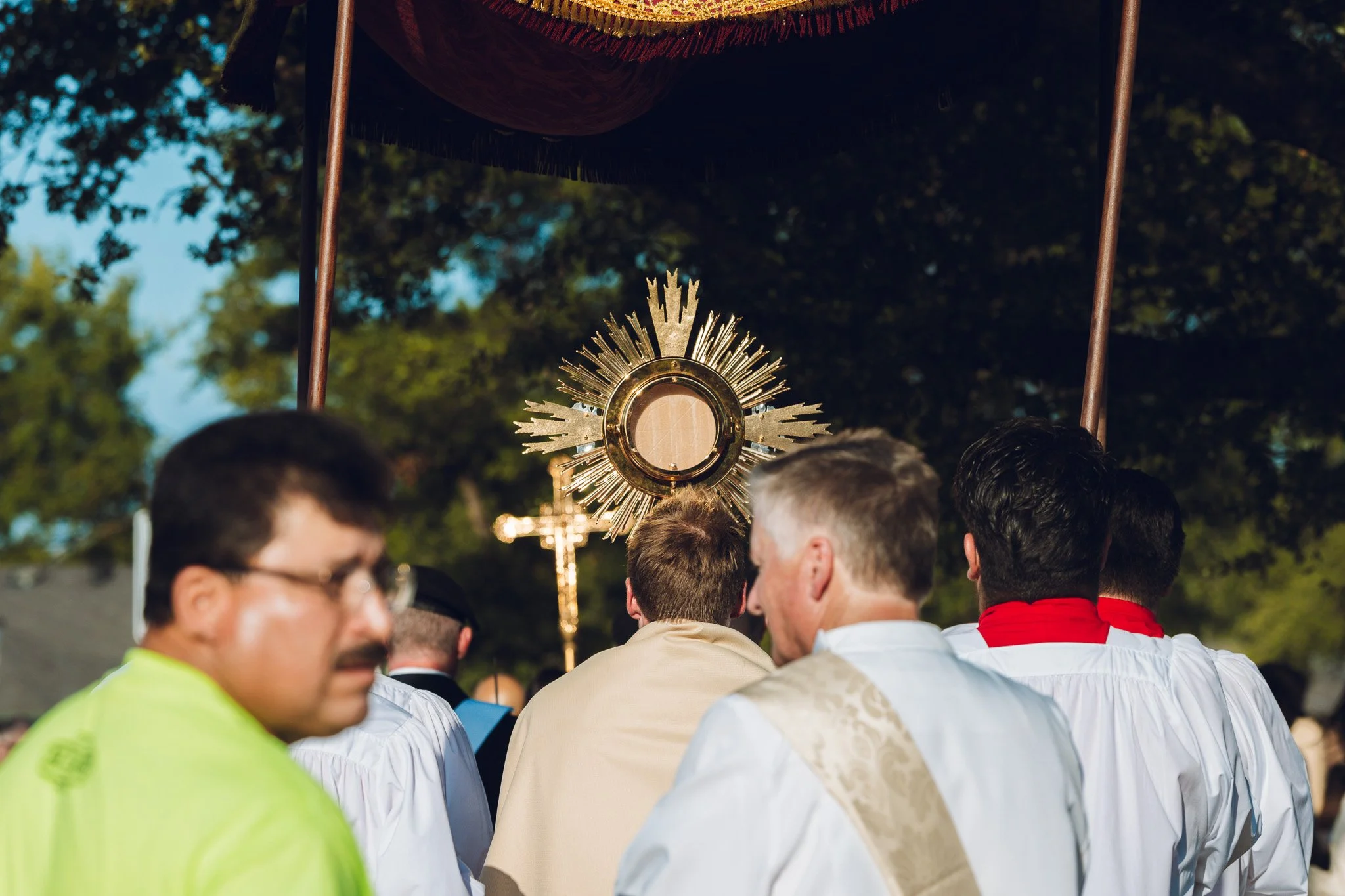
Corpus Christi Procession

WHEN: Saturday, June 6, 2026
Eucharistic Procession will begin immediately after 5pm Mass.
You are welcome to attend the 5pm Mass or gather in the courtyard after Mass.

WHERE: St. Ann Parish, 180 Samuel Blvd. Coppell, TX 75019
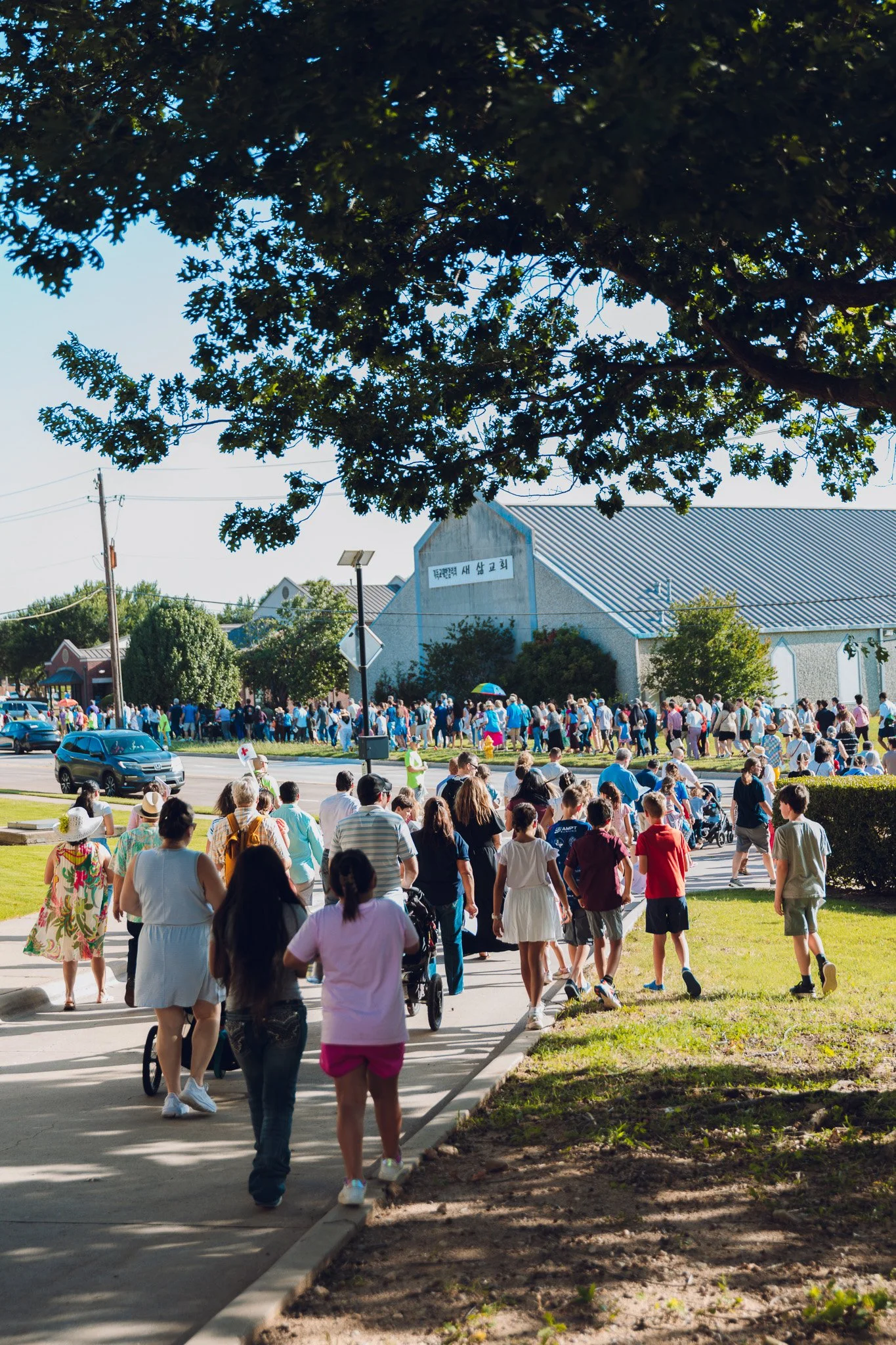
Join us for a special procession starting and ending at St. Ann Parish! We'll be processing Jesus about 1.25 miles around Coppell.
Wear comfortable shoes for the walk. We recommend bringing your own water bottle as well




FAQs
-
A Eucharistic procession is like a holy parade that brings Jesus, truly present in the Holy Eucharist, into the world that he loves. The Blessed Sacrament is placed in a monstrance and carried out of the church by a priest. A Eucharistic procession sometimes begins at one church and ends at another and is connected to the celebration of the Mass or a time of Adoration.
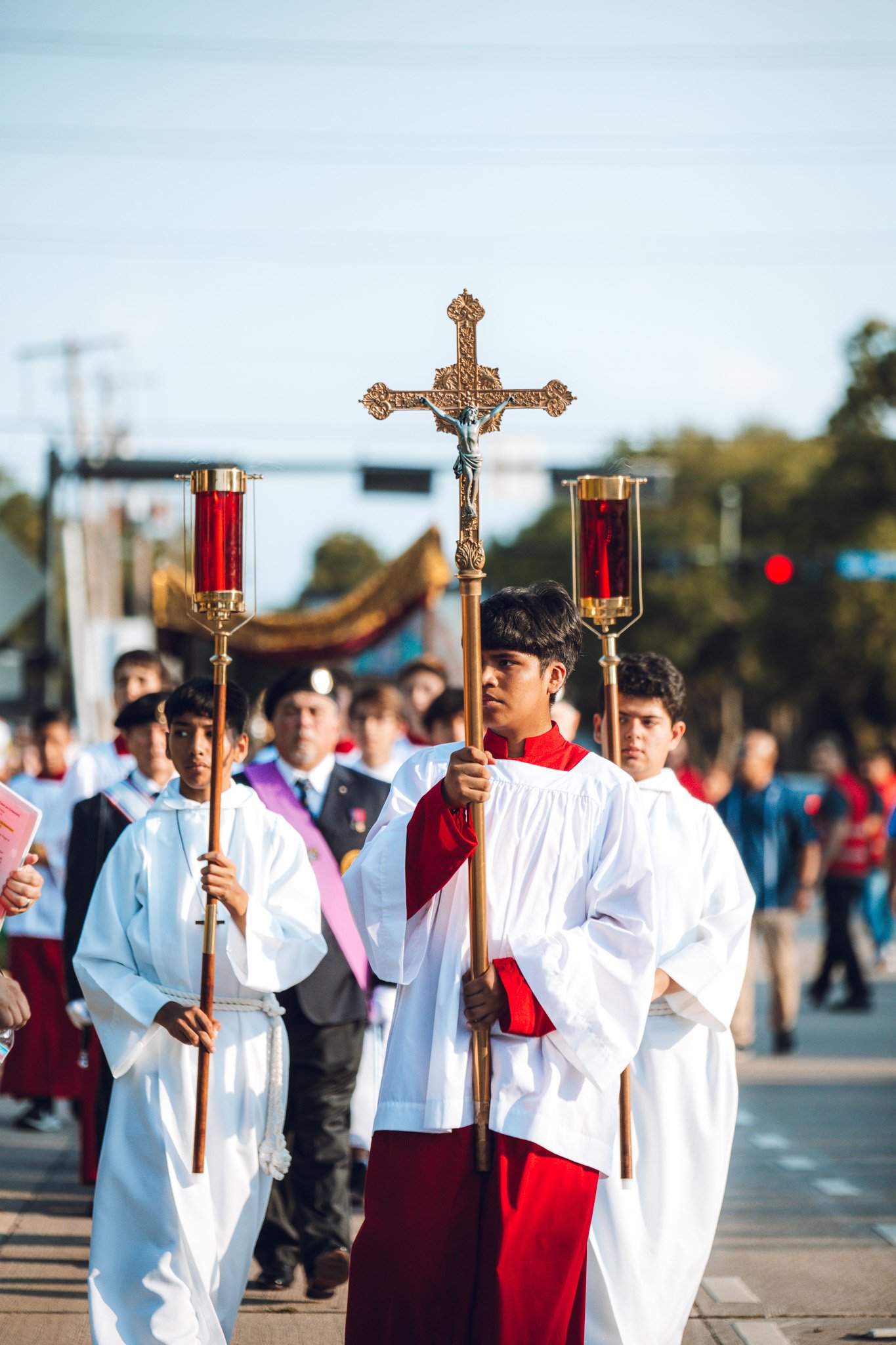
The procession can be a short walk around the neighborhood of a church or can stretch for miles and miles from start to finish. Along the way, Jesus is accompanied by priests, deacons, altar servers, and people of all ages. Together they can pray the Rosary, sing hymns, or walk in silent prayer. Processions are often planned for the Solemnity of Corpus Christi but can take place at any time of the year. (source: National Eucharistic Congress)
-
Corpus Christi is Latin for the “Body of Christ.”
In the Catholic Church, Corpus Christi is celebrated as a solemnity on the Sunday following the Most Holy Trinity Sunday. The solemnity is a celebration of the Tradition and belief in the Eucharist as the Real Presence of the Body and Blood of Jesus Christ. (source: EWTN)
-
The Corpus Christi Procession is a celebration that honors the Feast of Corpus Christi and the institution of the Eucharist. It's a wonderful time to reflect on God's continuous presence in our lives and our shared journey towards Heaven. This procession is a powerful symbol of our faith and unity within the Church community!
Beyond spiritual devotion, it's a profound way to share Christ's love with others, potentially sparking deep transformations. As we participate in this sacred act, we invite you to join us in praying for those yet to experience the Eucharist's transformative power.
-
It is not mandatory to sign up, but we would appreciate those who are on Facebook, RSVP’ing for the event. It would help us to better plan as well as to cooperate with the City of Coppell on traffic flow.
-
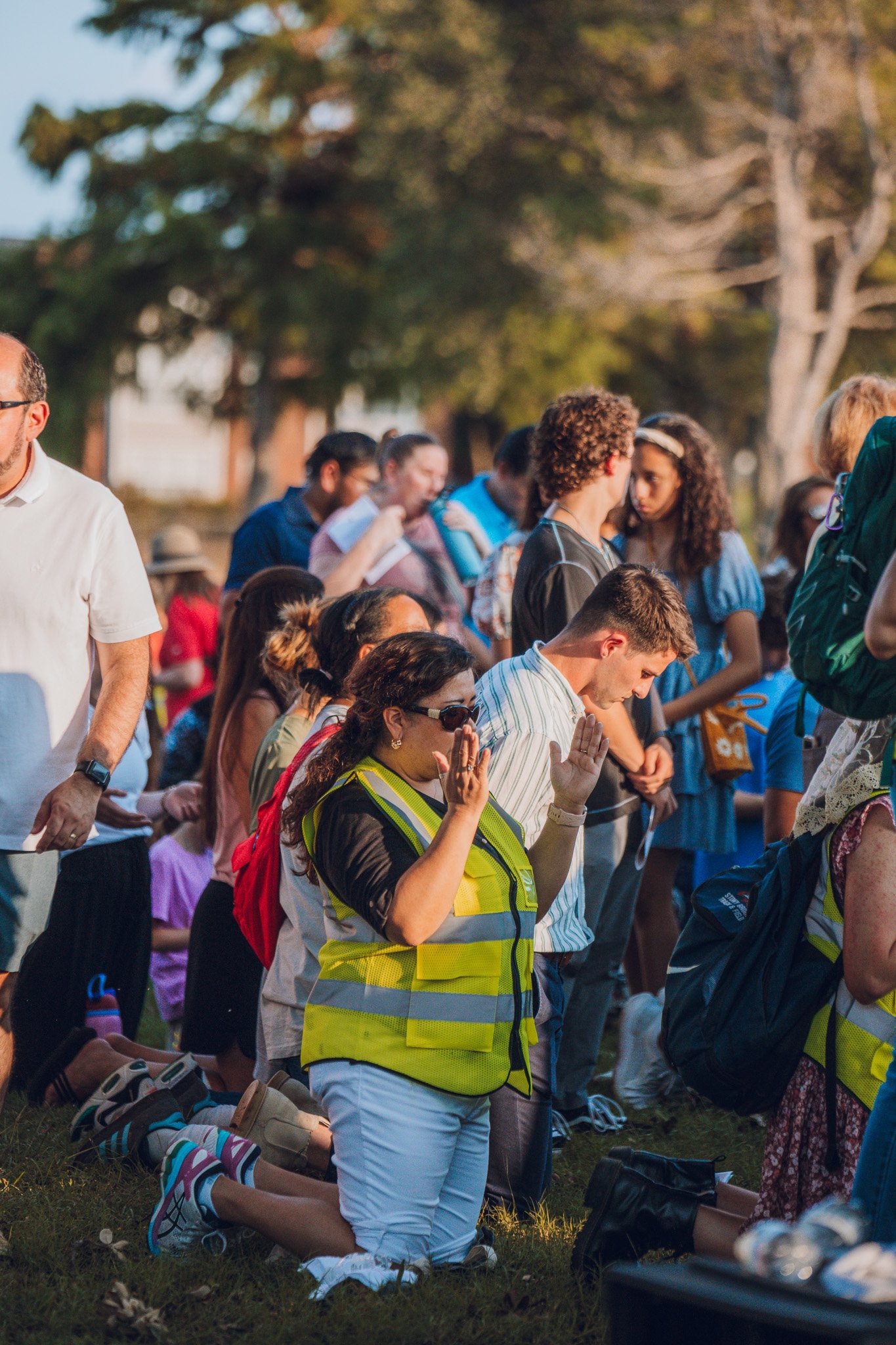
Please bring water for the procession. Texas weather/heat in June on an almost 2 miles walk could be challenging for some. Water will be provided at altar stops, but we still encourage you to bring a backpack and/or carry your own water with you on the procession.
Bring items to pray with such as a rosary, bible, holy cards. -
No problem! You can join us at one of the altar stops along the way.
-
We cannot predict the weather this far in advance; especially in Texas. Therefore, we will post any updates on our social media if plans do change.
-
It will be essential to make use of the restrooms at St. Ann prior to our departure. We will process through primarily residential areas, and available restroom facilities will be sparse. There will not be any scheduled restroom breaks along the way. If you do have to stop, it will be your responsibility to catch up with the procession again afterward.
-
Yes, when you attend our event, you provide implicit consent for your picture to be taken. This allows us to capture the atmosphere and memorable event moments while respecting your privacy rights. Please kindly let the photographer know if you would not like you or your dependant’s photo to be taken.
How is St. Ann participating in the National Eucharistic Revival?

We have completed the renovation of the Main Church. View updates and what’s next!

Parish-Wide Adorations for all ages! Stay connected with us on future community events!

Come and adore the Lord in our Perpetual Adoration Chapel!


The National Eucharistic Revival is a movement to restore understanding and devotion to this great mystery here in the United States by helping us renew our worship of Jesus Christ in the Eucharist.
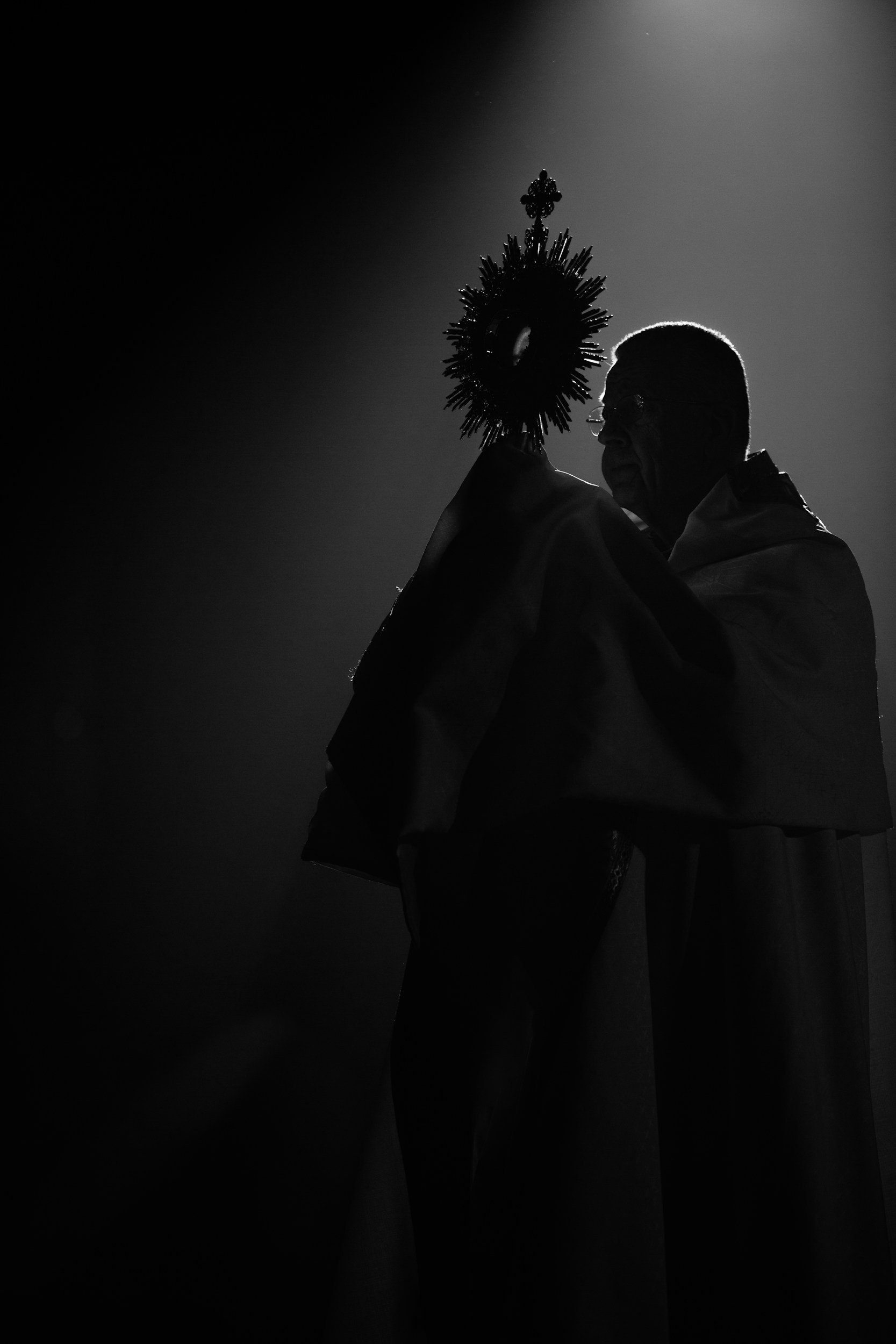
The presence of Christ in the Eucharist is real, true, and substantial.
Here are some educational videos all about the Eucharist!

"I am the living bread that came down from heaven; whoever eats this bread will live forever; and the bread that I will give is my flesh for the life of the world." - John 6:51
"I am the living bread that came down from heaven; whoever eats this bread will live forever; and the bread that I will give is my flesh for the life of the world." - John 6:51
“While they were eating, He took bread, said the blessing, broke it, and gave it to them, and said, ‘Take it; this is my body.’ Then He took a cup, gave thanks, and gave it to them, and they all drank from it. He said to them, ‘This is my blood of the covenant, which will be shed for many.’” - Mark 14: 22-24
“While they were eating, He took bread, said the blessing, broke it, and gave it to them, and said, ‘Take it; this is my body.’ Then He took a cup, gave thanks, and gave it to them, and they all drank from it. He said to them, ‘This is my blood of the covenant, which will be shed for many.’” - Mark 14: 22-24
“Then He took the bread, said the blessing, broke it, and gave it to them, saying, ‘This is my body, which will be given for you; do this in memory of me.’ And likewise the cup after they had eaten, saying, ‘This cup is the new covenant in my blood, which will be shed for you.’” - Luke 22: 19-20.
“Then He took the bread, said the blessing, broke it, and gave it to them, saying, ‘This is my body, which will be given for you; do this in memory of me.’ And likewise the cup after they had eaten, saying, ‘This cup is the new covenant in my blood, which will be shed for you.’” - Luke 22: 19-20.
Eucharistic Miracles throughout history

Eucharistic Miracle of Bolsena - 13th century (Establishing of the feast of Corpus Christi)
In 1263 a German priest, Peter of Prague, stopped at Bolsena while on a pilgrimage to Rome. While celebrating Holy Mass, he had barely spoken the words of Consecration when blood started to seep from the consecrated Host and trickled over his hands onto the altar and the corporal (a liturgical cloth). The corporal remains on display in the Cathedral of Orvieto.
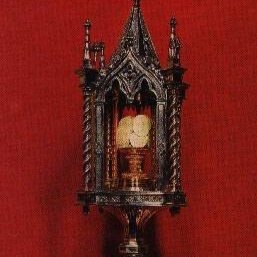
The Hosts of Siena, Italy – 18th century
On August 14th, 1730, the eve of the Assumption feast, Catholics in Siena, Italy were celebrating a special festival. During this event, thieves entered the Church of St. Francis and stole a ciborium containing hundreds of consecrated hosts.
Two days later, the missing hosts were discovered inside an offering box, covered in cobwebs and dirt. After cleaning them as much as possible, the hosts were placed in a new ciborium and returned to the Church of St. Francis for prayers of reparation and veneration.
The priests chose not to consume the hosts but allowed them to deteriorate due to their condition. Remarkably, 285 years later, the hosts have not deteriorated and still appear fresh. They are now housed in the Basilica of St. Francis in Siena, Italy.
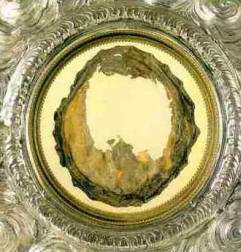
Miracle of Lanciano – 8th century
In the 8th century, around the year 750, a priest in Lanciano, Italy, experienced doubts about the real presence of Jesus in the Eucharist. During Mass, while uttering the words of consecration (“This is my body,” “This is my blood”), he witnessed the bread and wine transform into actual human flesh and blood. The blood congealed into five globules, symbolizing the five wounds of Christ.
Remarkably, this flesh has been preserved over the centuries. In a groundbreaking 1971 investigation, Professor Odoardo Linoli meticulously examined the flesh and made a significant discovery: it was cardiac tissue. He also noted that the accompanying blood resembled fresh blood, an astonishing revelation given its age.
You can visit this miraculous relic, housed in the Church of San Francesco in Lanciano, Italy.
